503 of 592 articles written. Drafts by AI are unchecked until they are rewritten by hand, so treat every claim and citation in them as unverified. Dimmed cards are planned articles that do not exist yet. Each heading counts its articles: (3) when all three exist, (2/3) while one is still planned.
Astronomy & Physics (42)
Foundations of Physics (6)
Physics gives theism several modest arguments that cannot be priced, all forms of one fact: the world is orderly, intelligible and began in a special state. None is decisive. The decisive results refute overclaims on both sides: the second law permits evolution, and quantum 'nothing' is not nothing. Physics leaves time, quantum interpretation and numbers open.
Fine-Tuning (3)
Some constants have bounded ranges for stable atoms, nuclei, and stars. Popular diproton, 10^120, and Penrose probability claims fail; the evidence does not identify God.
Cosmology (27)
The standard model of cosmology graded layer by layer, the rival cosmologies proposed in its place, and the young-earth answers to distant starlight. This page is the front door to the section and links to all of it; the summary and verdict are still to be written.
The Big Bang (10)
The Big Bang is a stack of six separable claims, not one theory. Expansion, the light elements and the microwave background are very strongly supported. Inflation is barely testable, dark matter is undetected, the cosmological constant is unexplained, and lithium-7 and the matter-antimatter asymmetry are unsolved.
Rival Cosmologies (6)
None of the five rivals to the standard model works as a cosmology. Tired light, the steady state, plasma cosmology and Arp's intrinsic redshifts failed measured tests; Lisle's Doppler model fails supernova and microwave-background tests; MOND fits galaxies but not clusters or the background. None gives a young universe, and most describe an eternal one.
Young-Universe Cosmologies (10)
Eight young-earth answers to distant starlight, checked against their own literature. Created light implies a record of events that never happened, the decaying speed of light was refuted by a creationist's reanalysis, and Humphreys and Hartnett both walked away from their own models. Lisle's synchrony convention survives, but by his own account it changes no observation.
Stars and Planets (6)
Stars and planets are seen forming, though how is partly unsolved, and every clock read on them, from meteorites and the Sun's sound waves to cooling white dwarfs, gives billions of years. A creationist astronomer's audit retires 32 of 48 young-age arguments; the survivors are open questions about formation and resupply, not ages.
Geology & Earth History (77)
Dating the Earth (22)
Independent clocks, their assumptions, their failures, and how often they agree on the same rocks. This page is the front door to the section and links to all of it; the summary and verdict are still to be written.
Geochemical Clocks (8)
Seven clocks that divide an inventory by a rate, each only as good as its reservoir's closure. Ocean salt and air helium give young-earth maxima of millions of years on their own authors' arithmetic. Argon is the hardest old-earth number examined. The four recent-past methods fail by measured, explained amounts, not by the growing factors a young earth needs.
Non-Radiometric Clocks (7)
Ice layers, lake laminae, tree rings, growth bands and orbital cycles date the past by counting, with no decay constant anywhere in the arithmetic. Where they can be checked against radiometric clocks they agree to between 0.07% and 7%, and the disagreements were all found by the people who built the counts.
Radiometric Concordance: Do the Dating Methods Agree? (2)
Modern independent clocks on volcanic ash agree within 0.02 to 0.24 percent. Older whole-rock dates often disagree where inheritance, lead loss, and closure temperatures predict.
Earth and Climate Science (12)
The earth has warmed about 1.3 °C, mostly from fossil CO2, and none of that rests on deep time. The real dispute is how much more: 1.5 to 3 °C per doubling, not CMI's 0.5. Skeptics are right about hot models and failed forecasts. Harms outgrow benefits by 2 to 3 °C. The post-Flood ice age fails the ice cores.
Does Warming Do More Good or Harm? (3)
So far, mixed: more plant growth and fewer cold deaths against more heat deaths, crop stress and rising seas. The economists who once found a net benefit now find a small net cost. Harms grow faster than the warming, fall hardest on the poor, and outweigh the benefits by 2 to 3 °C.
The Ice Age (2)
Oard's post-Flood model makes several successful climate predictions, but one 700-year ice age cannot explain 110,000 Greenland layers, about 50 glacial cycles, stacked tills, sea-level fall, rebound, and its own heat budget.
Flood Geology (43)
The column's order is real and young-earth geologists now accept it. Fast single events, young ocean floor and flat contacts favour catastrophe. But heat, salt, chalk, buried soils, rooted coal, cooling plutons and slowly made surfaces each need far more than a year, and the models' authors say a miracle removed the heat.
Igneous and Metamorphic Time (6)
Magma rises, lava erupts and metamorphic reactions run fast, and the global heat is small. Moving heat through thick rock is slow. Batholiths and metamorphic belts need 10⁴ to 10⁷ years, Devils Tower decades at least, and flood-basalt piles hold soils and lakes between flows. Polonium halos record dose, not time.
Rapid Deposition and Catastrophism (5)
Mainstream geology already reads fast laminae, mass burials, a canyon cut in loose debris and mudflow-buried trees as rapid. The four cases show real fast events, but each also records repeated events or long durations, priced at years to millennia, so a local catastrophe cannot stand in for a one-year global Flood.
Slow Deposition and the Rates Problem (6)
Salt and buried soils resist a one-year Flood most: salt needs 290 times the sun's power, and soil nodules that cut and are cut by burrows formed at a surface. Stromatolites and iron formations fail every young-earth placement, Vardiman's deep-sea model fails measured rates, and the bioturbation answer holds only for lightly burrowed lower Palaeozoic rock.
The Geologic Column (3)
The column's order comes from superposition and fossil succession, worked out before radiometric dating, and it is not circular. Leading young-earth geologists accept it and its correlations. Few places hold every period. Flood models disagree on where the Flood begins and ends in it.
The Grand Canyon (4)
Lake spillover across the Kaibab arch is now the leading mainstream explanation for how the Colorado River got through — a mechanism creationists proposed first. But the canyon's width, its buried forested river valley, and the dated dung on its cave floors all rule out a canyon cut in weeks.
The Heat Problem (2)
Every young-earth Flood mechanism releases heat: accelerated decay, runaway plate motion, magma, and impacts. Added up from creationists' own published figures, the Flood year deposits about 3 × 10²⁹ J. Boiling the whole ocean away absorbs about one per cent of that. The people who built the models say the heat was removed by a miracle, and every natural mechanism proposed since fails on its own author's arithmetic.
Unconformities and Megasequences (5)
The surfaces are real, and young-earth writers describe them accurately. But rotted granite under the Great Unconformity, one bedding plane bevelling twenty-three formations, and megasequence boundaries that cut to different levels across one continent show surfaces made slowly and at different times, not cut in one year.
Biology (201)
 Low-Effort Arguments in the Evolution Debate Published
Microevolution and macroevolution are legitimate scientific terms; appeals to consensus, credentials, or bad design do not answer the underlying evidence. Semantic and genetic-fallacy arguments should be separated from substantive tests of evolution and design.
Biological Design (54)
Taken together, the six articles find no test yet that design passes and evolution fails. The design inference, irreducible complexity and redundancy each wait on a number neither side has produced, and simple design reuse fails. The flaws critics cite mostly argue common descent, not against design. Parasites raise a moral question that well-made machinery sharpens.
 Organisms Appear Designed Published
Biologists across viewpoints agree that organisms display intricate, machine-like organization. The dispute is whether natural selection explains that appearance or it warrants design; apparent design is evidence that needs explanation, not by itself proof of a designer.
Perspectives on Evolution and Design Being rewritten
Scientists across the origins debate agree that data outranks authority. Their disagreements concern how biological complexity arose and whether apparent design is real, while quotations alone cannot decide the evidence.
The Design Inference
Dembski's explanatory filter removes only the chance hypotheses fed to it. Its one worked biological number prices random assembly, which no biologist proposes, and its author set it aside. A specification may be found after the fact. The test that survives uses a chance model with selection; it has been computed for a few mutations, never for a molecular machine.
Arguments from Bad Design (35)
Biological defects must be judged against measured functions, feasible alternatives, and real constraints. Retinal light guides establish useful function, while appendix research supports a testable protective role. Useful structures can retain costs and inherited limitations. Neither imperfection nor usefulness alone decides whether life was designed.
Embryonic Leftovers (4)
Recapitulation, the claim that embryos replay adult ancestors, was abandoned by biologists by 1940, so Haeckel's faked plates settle nothing. Vertebrate embryos do share a mid-development stage, measured in gene expression, and common descent explains it naturally. Creationist replies mostly answer the dead claim; the open question is why development runs through that stage.
The Human Body Under Criticism (6)
Critics from Krogman in 1951 to Lents in 2018 use human anatomy mainly as evidence of history. The one whole-body redesign concedes its own costs and has never been priced. Back pain and hernia are large costs; choking and the nuchal cord are small. The Fall answer covers wear and disease, not layout.
Vestigial Structures (15)
The old vestige argument, that useless organs prove evolution, is dead, and most listed organs do work. The living argument is about reduced homologues and ancestry, which finding a function does not answer. Whale and snake pelves and horse splints remain strong for ancestry; the appendix, goosebumps and palmaris longus are weak for either side.
Irreducible Complexity (3)
Behe's 1996 definition rules out only direct routes, as he said on his page 40. Whether indirect routes are too improbable has never been calculated for any named machine. Muller's 1918 route was shown in a laboratory in 2012, for a duplicated part that lost function. No route to any of Behe's five systems has been reconstructed with measured fitness.
Predation, Parasites, and Pathogens (10)
Gene loss, altered regulation, and reused biological machinery can help explain how harmless relationships become harmful. These mechanisms support parts of creationist corruption models, but do not establish an originally harmless world or explain every specialized apparatus for attacking a host.
Evolutionary Mechanisms (16)
What mutation, selection, drift, recombination, and shared patterns can establish about biological change. This page is the front door to the section and links to all of it; the summary and verdict are still to be written.
Biogeography and Common Descent (3)
Where animals live tracks sea depth, island order and the nearest source, as descent from local ancestors predicts. The post-Flood model claims these patterns too, through diversification within kinds, and its rafting holds up. It fails on the record: no walkable route to Australia, no marsupial fossils in Asia after the Miocene, and a one-way faunal break.
Molecular Clocks (2)
Molecular-clock dates are a ratio with an imported time. Fossil-calibrated deep dates borrow the radiometric timescale and lean old, yet fossil-free family rates give long dates too. Clocks pass tests inside their sampling window and fail toward youth beyond it. Young-earth mitochondrial clocks fit only by counting mutations that do not last.
Phylogenetic Inference and Congruence (2)
Biological trees agree above chance, but designed systems can too. Common descent gains force from genomic insertions, chromosome order, and fossils, not congruence alone.
Population Genetics (6)
Effective size is not headcount; most mutations are lost by drift; selection weakens below 1/(2Ne); and load is not a death count. Clock and bottleneck estimates depend on demographic models.
Human Origins and Genetics (42)
The fossils and genomes agree with Genesis on what humans are: one shallow family, distinct from the apes, making symbols as early as their bones appear. They disagree on when: rock and genetic clocks put human history several to hundreds of times past a biblical date, and the human-ape likeness follows the pattern of common descent.
Hominin Fossils (24)
The young-earth division of the hominin fossils into apes and humans holds at both ends: the australopiths were apes that walked upright, and the Neanderthals, Denisovans and Middle Pleistocene people were human. It splits on the small-brained mosaic fossils between, and has not explained the dates or why brain size rises with time.
Lucy and the Pre-Human Hominins (6)
Lucy was not human: her brain and locomotor anatomy are australopith, though she walked upright. The oldest biped claims rest on few, reconstructed bones, and mainstream work has reversed the Ardipithecus headline. Homo naledi leans human on both sides' methods. The family trees rest on a method that failed its own controlled test.
The Genus Homo (15)
On what they were, the young-earth reading of Homo as Adam's descendants fits the Neanderthals, Denisovans, Middle Pleistocene people and earliest Homo sapiens well. It is weakest at the small-brained edge, where its own writers disagree. On time it has no answer: every species is dated about 7 to 650 times the years since the Flood.
Human Genetic Ancestry (6)
Human DNA fits one origin for all people, and three of four standard arguments against a single first couple fail. It does not fit a recent one: measured rates of lasting change put mitochondrial Eve and Y-chromosome Adam over 100,000 years back, and Africa's genetic depth exceeds any post-Babel dispersal.
Humans and Chimpanzees (6)
Human and chimpanzee DNA is about 96 percent alike in the regions that line up and 85 percent by a whole-genome count. Shared retrovirus positions, nested inversions and mutation's fingerprints fit common descent better than separate creation, and the chromosome 2 fusion is real and old. Young-earth critics corrected real overstatements. Brain, gait, culture and life history differ greatly.
Race, Skin Color, and Common Ancestry (3)
Humans are one shallow species: 85 to 95 percent of genetic variation lies within every population, yet thousands of markers together still sort people by continent. Skin color is many-gened and shifts fast in populations. Polygenism failed. The shallow pattern fits a recent African origin and a young-earth family alike; allele ages and dating separate them.
Junk DNA and Genome Function (9)
How much of a genome does anything, and what follows if most of it does. Evolutionary theory long predicted that large genomes are mostly junk; design advocates predicted widespread function. This is the debate where that prediction is settled or not.
 Functional DNA is Evidence of Design Published
At least 85% of human DNA is transcribed in cell- and stage-specific patterns, and tested transcripts are often functional. The article argues that most mammalian DNA serves a purpose and that this exceeds what mutation and selection can create or preserve.
 Functional versus Junk DNA Predictions Published
From 1968 through 2014, many evolutionists predicted that most large genomes would be junk, while design advocates predicted widespread function. Later discoveries of pervasive transcription and regulatory activity favored the design prediction, though biochemical activity does not prove that every base is sequence-constrained.
GWAS and Noncoding Variants
About 96% of disease-linked variants lie outside protein-coding DNA, but per base they are concentrated in coding and regulatory DNA, and most are tags for nearby causes. Proven noncoding causes exist and matter. The data show regulatory DNA is a large share of what matters, not that most of the genome does.
Noncoding RNA and Pervasive Transcription
Most of the human genome is copied into RNA, but most of that is introns of known genes, most lncRNAs sit at a few copies per cell, and only a minority tested by knockout show an effect. Random DNA is transcribed in yeast but silent in mouse stem cells. Most noncoding RNA is untested, not proven functional or junk.
Overlapping Genes and Multi-Layer Coding
Two-frame coding fills half the hepatitis B genome but 0.064% of human coding letters on one standard transcript per gene. Where it occurs it couples two proteins: about 1% of single-base changes are silent in both. Where comparisons date them, second frames look lineage-limited, as overprinting predicts. Claims of many codes on most DNA are unmeasured.
Pseudogenes
About 14,700 human pseudogenes cover under half a percent of the genome. About one in five shows transcription and a few percent show constraint, but only a few dozen have a measured function. Most were never tested. HBBP1 is a real relic-turned-useful case; vitellogenin, enamelin and GULO are not.
Synonymous Mutations and Codon Usage
Some synonymous mutations change splicing, mRNA stability or folding, and cause disease. Most measured in human cells have no detectable effect, and the 2022 yeast claim that most are strongly harmful fails there. Ape comparisons put 20 to 40 percent of these sites under weak constraint: enough to bias dN/dS and clocks modestly, not to overturn them.
 The C-Value Paradox Published
Large genomes need not be mostly junk: genome size affects cell size and development, while repetitive and noncoding DNA can have structural and regulatory functions. The onion test therefore does not establish that organisms are undesigned.
Transposable Elements
Transposable elements are 46% of the human genome. A few dozen copies became genes or switches proven by knockout or deletion. About 16% of TE sequence carries a regulatory mark, at or below chance, about 3% is conserved, and almost none has been tested. Neither 'mostly junk' nor 'mostly functional' is measured.
Major Evolutionary Transitions (6)
Across five proposed steps from oxygen-making photosynthesis to animal body plans, the parts are related as common descent predicts, and something short of each transition is seen or built. The step that defines each, from water splitting and the nucleus to meiosis, the germ line and new body plans, is neither demonstrated nor priced.
New Genes (5)
Comparing genomes shows where most genes got their templates: copying, with two to fourteen amino-acid changes for each tested new job, and a few short genes from non-coding DNA. No route reaches the thousands of founding protein families in each genome, and those founders are where the dispute over how rare a working protein bites.
Observed Evolution (26)
What evolution has been watched doing, and what it produced. Every case here rests on change seen happening rather than on comparative genomics across taxa; origin questions settled by sequence comparison sit under New Genes instead.
Benchmarking Evolution (9)
A ledger of births, mutations and adaptive changes for HIV, influenza, SARS-CoV-2, tuberculosis, the malaria parasite, Lenski's bacteria and phage lambda. One-step changes are cheap everywhere. A change needing two unpaid steps cost about 10^20 parasites. Counted per site, all mammals searched as thoroughly as the parasite, so the head-count argument fails and only its per-lineage form survives.
 HIV Evolution Published
In roughly 100 years, HIV produced about 10^22 mutations across 6 × 10^22 particles but fixed no more than about 5,000 constructive changes. The article argues that this measured output is too small to support the creative power required for mammalian evolution.
Influenza
A century of sequenced influenza records 10^22 to 10^24 mutations. The search bought about a hundred adaptive substitutions, nine new glycosylation sites, four defeated drugs and three pandemics built from existing segments. No new gene, and a measured ceiling on the glycan gains.
Lenski's Long-Term Evolution Experiment
Thirty-eight years, twelve flasks and seventy trillion cells produced one new metabolic ability, in one population. Presumptive knockouts supply over half the early adaptive mutations and at least a quarter of the late ones, yet fitness rose 70% through 60,000 generations. The Discovery Institute's stepwise-citrate claim holds up, and every measurement behind it was made by Lenski's own collaborators.
Measuring Biological Information
Szostak and Hazen's functional information is the sound measure of biological information and cannot yet be computed for a genome. Durston's Fits, Gitt's definition and algorithmic specified complexity give no usable number for one either. This series scores mutations as gain, loss, modification or transfer and counts new nucleotides. Behe's First Rule is right about rates, unproven as a limit.
Mycobacterium tuberculosis
The tuberculosis bacillus divides about once a day, mutates slowly and exchanges no genes, so every adaptive change arose by mutation inside the lineage. About 10^19 bacilli in the drug era produced resistance to every drug used against them, all by altering or breaking parts they already had. Ancient genomes date the complex to under 6,000 years.
Plasmodium falciparum
In about 75 years of drug treatment, between 10^21 and 10^22 malaria parasites tried every single-letter mutation billions of times. The documented result is one new transport activity, one deleted gene and a set of modified enzymes, most with a fitness cost. Chloroquine resistance cost about 10^20 parasites because its first steps do not help alone.
SARS-CoV-2
The best-sequenced epidemic in history searched every one-letter change to its genome about 10^16 times over and every two-letter pair about 10^9 times. It bought higher receptor affinity, antibody escape, a shifted entry route, one costly drug-resistance path and several knocked-out genes. No new gene, protein or enzyme appeared.
When Evolution Creates Information
Mutation and selection have been watched building new functions: citrate use, a second phage receptor, new influenza glycosylation sites, a laboratory ligase. The claim that mutations never add information is false. The watched gains are small, at most four new nucleotides or tens of bits each, far below the 500-bit design threshold, and outnumbered by losses and modifications.
How Hard Is a New Function? (3)
How much searching a specific new capability costs, measured where the search was watched from beginning to end.
Observed, or Only Inferred? (2)
Evolution has been watched in small steps within species: a few mutations, or shifts in variants already present. The large gains, such as new genes, fish antifreeze and species radiations, are reconstructed from comparisons. Some famous cases sold as observed were never watched, and several design and young-earth claims, including Axe's protein rarity and genetic entropy, are inferences too.
Plants and Animals (9)
Most change watched in wild and domestic plants and animals ran on variation already present, as creationists predicted and mainstream reviews agree. The peppered moth ran on a new mutation. None of the watched changes is a gain of function, and the old variation carries ages young-earth models have not answered.
Selection in Human Populations (3)
Alleles that measurably spread through human populations within recorded or datable time, with their selection coefficients and what each one changed.
The Fossil Record (28)
The fossil order is real, and no young-earth model reproduces it. The named transitional sequences are real, and four cross the created-kind line unexplained. Young-earth claims hold for fast burial of single fossils, gut contents, dinosaur soft tissue and unexplained stasis. Nests, every claimed out-of-place fossil and the claim that all phyla appeared at once fail.
Claimed Fossil Anomalies (4)
No claimed human track, tool, pollen grain or living dinosaur examined on this site survives four tests: provenance, stratigraphic context, independent identification and open publication. Creationists killed many of these claims themselves, and their organisations have retired them unevenly. The one real anomaly, soft tissue in dinosaur bone, is a preservation puzzle.
Reading the Record (7)
The fossil record reads reliably for order and comparisons, poorly for ancestry from shape and restored soft parts. Completeness depends on the group: a missing shelly sea animal is evidence, a missing insect is not. No young-earth model reproduces the order. Rapid burial fits spectacular fossils, not the rocks; frauds discredit nothing; dinosaur soft tissue remains unsolved for deep time.
Stasis, Extinction, and Evolutionary Tempo (3)
Stasis is real but does not decide between the models: deep time must explain why change stops, a young earth why it ran so fast. Living fossils hold at family rank and mostly fail at genus and species. Mass extinctions were real deaths, not burial order, and no young-earth model yet fits the recoveries into the Flood year.
Trace Fossils (5)
Tracks, nests, dung and bored bones record animals alive on a surface. Oard's BEDS model fits single fast surfaces, and traces whose clock ran inside a living animal cost the Flood nothing. Nests fail: one clutch needed 99 counted days against an 80-day window. Stacked track horizons and bored bones are unfinished.
Transitional Sequences (7)
The named fossil sequences are real: each runs in stratigraphic order, and the flat young-earth objections to them fail. Jaw-to-ear, fish-to-tetrapod, whales and birds cross the family line creationists draw for created kinds; the horse series stays inside it. The museum ladders are wrong, real gaps remain, and no young-earth model predicts the order.
The Origin of Life (13)
Overview of the Origin of Life series. No laboratory has run a replication cycle on the whole of a molecule, or reached a cell, from plausible prebiotic chemistry. Every gap that has closed since 2008 was a monomer-synthesis gap; none in polymerisation, information or replication has closed. Popular probability arguments attack processes no researcher proposes.
History (123/133)
 Ancient Israel: Slavery, Servanthood, and Social Welfare Published
Evidentiary Crafts (3/9)
The specialist methods needed to judge manuscripts, artifacts, inscriptions, languages, chronology, and disputed ancient claims.
Ancient Chronology and Calendar Conversion (1)
Regnal years, eclipses, king lists, calendars, synchronisms, and how dates acquire honest uncertainty ranges.
Genesis and Early Biblical History (27)
The text, chronology, and physical claims in Genesis examined against manuscripts and external evidence. This page is the front door to the section and links to all of it; the summary and verdict are still to be written.
Adam, the Fall, and Death (2)
Both Testaments treat Adam as one man, and Paul's argument in Romans 5 and 1 Corinthians 15 does not work without him. Archetypal and mytho-historical readings can be stated fairly; each costs something Paul says. Cain's wife was his sister and the genetic objection fails on arithmetic. The Fall cursed the ground, not physics.
Competing Readings of Genesis (3)
Nine readings of Genesis 1 are tested against the same text. The calendar-day reading passes the most textual tests but has weak spots. Every old-earth reading was proposed after the geology it reconciles, by its authors' own admission, and each fails a test the plain reading passes. Passing the tests shows what the author meant, not that he was right.
Genesis and Ancient Near Eastern Parallels (2)
The Babylonian flood and creation tablets share real, specific features with Genesis 1-11, and they are older as written objects. Read against the primary texts, the flood parallel is close, the creation parallel is thin, and literary dependence in either direction has not been shown. The article states what evidence would show it.
Human History Across the Flood Date (5)
Egypt's early dynasties, the Near Eastern Neolithic, Japan's Jomon and Australia's first settlers lie before or run through every biblical Flood date, on clocks that agree with each other. The Septuagint's date clears Egypt's pyramids but nothing older. No published compression works, and population growth shows a young human race is possible, not that it is young.
Searching for Noah's Ark (5)
Genesis 8:4 names a region, the mountains of Urartu, not a peak, so the Bible requires no particular site and no surviving Ark. No candidate has produced identified wood, sampled independently and published. Every wood date published in full is under 1,700 radiocarbon years; every result said to favour an Ark lacked a named laboratory or a full report.
The Flood Narrative (2)
Genesis 6-9 describes a flood that covers every high mountain, kills every land creature outside one boat, and is sealed by a promise never to repeat it. Its author meant a worldwide flood, and its most capable old-earth readers concede this. The local-flood reading was invented in the 1650s. The source division is a real pattern but a weak argument. Whether the flood happened is a geology question this article does not settle.
Babel, Language, and Human Dispersal (14)
Genesis 10 and 11 describe real Mesopotamian building and real ancient peoples, and the universal reading is the natural one. But Shinar's temple levels and two written languages, the ages of the text-dated language families, and Africa's genetic depth exceed what a Masoretic Babel allows. The Septuagint brings the word-change test within reach and leaves the genetic gap.
Language Families and the Tower of Babel (4)
Glottolog counts 421 families and isolates with no demonstrated links, as Babel predicts but also as the comparative method's horizon predicts on any chronology. Text-dated Indo-European and Sino-Tibetan are 6,000 to 8,000 years old. Under a Masoretic Babel, Hittite and Vedic need 2.5 to 4.8 times the fastest recorded rate; the Septuagint date with small founder groups nearly fits.
The Table of Nations (5)
Genesis 10 name by name: 32 names are secure, 7 probable, 15 contested and about 30 unattested. Its main Japhethite names carry 9th-7th-century Assyrian forms, yet it omits Persians, Chaldeans, Arabs and Urartu. The three lines are not language families or genetic clusters. The best fit is an old core updated in the Iron Age, not a one-off post-Babel record.
The Tower of Babel (4)
Genesis 11:1-9 is authentically Mesopotamian in its details and was read by every ancient reader as all mankind. But no Mesopotamian text or layer records a tower-and-tongues event; the temple platforms of Eridu and Uruk precede every genealogy-based date; AiG's 2242 BC has no sound source; and the Masoretic text allows a Babel up to 340 years after the Flood.
Israelite Religion in History (13)
Israel's religion did change: the wording of God's uniqueness sharpened, afterlife and Satan became clear late, and the prophetic books grew. But the evidence does not support Yahweh as El's son, Yahweh-alone as an exilic invention, borrowed theology or a forged Deuteronomy. It fits a demanded faith many Israelites kept leaving, though nothing outside the Bible reaches Sinai.
Old Testament Miracles as History (2)
Assyrian records confirm Sennacherib's failure to take Jerusalem, and a Tyrian record a drought under Jezebel's father. Jericho fell, but too early for either Exodus date. Natural models of the plagues, sea and manna need perfect timing. The NASA missing day and James Bartley's whale are legends to drop.
Prophecy and Apocalyptic as Genres (2)
Prophetic books grew after their prophets. Jeremiah's longer edition adds a promise after it came true, and Isaiah 40-55 probably comes from the exile. Apocalypses wrote past history as prophecy under ancient names. These findings remove some predictions from the evidence, but not texts copied before the events they describe.
Ugaritic and Ancient Near Eastern Parallels (2)
The parallels are real. Proverbs 22:17-23:11 drew on the Egyptian Instruction of Amenemope, and Isaiah 27:1 shares a rare phrase with a Ugaritic myth. Psalm 29, the law codes and Deuteronomy's curses show a shared world, not proven copying. No case shows borrowed theology: the differences are pointed. On dates the evidence pulls both ways.
Old Testament History and Archaeology (14)
Israel’s history tested against its texts, inscriptions, chronology, archaeology, and neighboring records. This page is the front door to the section and links to all of it; the summary and verdict are still to be written.
Prophecy (14)
Tested from the manuscript date forward, Isaiah 53 and Daniel 9 survive as evidence a skeptic must weigh, and Nahum on Nineveh is the best case among the nations. Most popular proof-texts fail. Ezekiel's Tyre and Egypt failed as worded, Daniel 11 goes wrong at Antiochus IV's death, and every dated end-time forecast by later interpreters failed.
Messianic Birth Texts (2)
Read in their own settings, Isaiah 7:14 promised Ahaz a near-term sign and was never read as messianic before Christianity; Micah 5:2 really expected a ruler from Bethlehem, but a birthplace is easy to supply; Genesis 49:10 was read messianically, but the claim that its scepter departed in AD 7 misstates its sources.
Prophecies About Nations and Cities (2)
Nahum's oracle on Nineveh is the strongest case: written before 612 BC and fulfilled in its main clauses. Babylon fell to the Medes but was not destroyed. Ezekiel himself records that Nebuchadnezzar failed at Tyre, which still stands, and Egypt was never desolate. Cyrus by name rests on Isaiah's disputed date.
Second Temple Messianic Expectations (2)
Dated manuscripts show that Jews before Jesus expected a conquering son of David, often beside a priestly messiah and a prophet like Moses, and sometimes a heavenly judge. No pre-Christian text has a messiah who suffers, dies and atones; every claimed example fails on its reading or its date.
Second Temple and Greco-Roman Context (6)
The Jewish and Roman worlds that shaped the New Testament and supply external checks on its people, practices, and chronology.
Jesus and the Gospels (27/30)
The historical case for Jesus and the tests that can be applied to the Gospel traditions. This page is the front door to the section and links to all of it; the summary and verdict are still to be written.
 Chronology of Christ Being rewritten
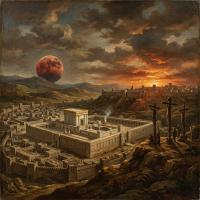
Jesus likely began his ministry in the second half of AD 29, continued for a little over three years, and was crucified on Friday, April 3, AD 33. The date combines Tiberius's fifteenth year, John's Passovers, the weekday, and lunar evidence.
Gospel Name Frequencies
The 79 Gospel men match Palestinian names at 10^36 to 1 against ignorance and reject the diaspora at p = 4.29 × 10^-13. This supports Palestinian tradition, not eyewitness authorship: apocryphal texts fit similarly, and names cannot prove each person historical.
Jesus in Archaeology and Outside Sources
Josephus's James passage names a Jesus called Christ; Tacitus says Christus was executed under Pilate; both are very probably genuine. Josephus's longer passage probably has a core whose wording cannot be recovered. Later texts mostly report Christians. Archaeology confirms officials and places, not events; no object is securely tied to Jesus.
Sacred Sites, Relics, and Pilgrimage Memory Planned
The Holy Sepulchre, Garden Tomb, Bethlehem, Capernaum, continuity of veneration, relic fraud, and legend growth.
The Synoptic Problem
Matthew, Mark and Luke share long runs of identical Greek — measured here at up to 33 words — so at least two of them copied a text. Mark was almost certainly first, which is the strongest evidence against the apostle Matthew writing Matthew. John shows no copying at all.
Undesigned Coincidences
Biblical accounts contain details that fit without noting the connection. The strongest support shared memory; copying and design explain weaker cases.
When Were the Gospels Written?
External witnesses set latest dates, while most precise Gospel dates remain disputed inferences. Markan priority links Matthew and Luke to Mark; John has separate dating arguments. The ending of Acts supports an early date only as part of a wider case, and a late Acts does not by itself date Luke equally late.
Who Wrote the Gospels?
All four Gospels are formally anonymous, and even conservative specialists grant that the titles were added later, by other hands than the evangelists'. The attributions still hold up unevenly: Luke and John have real support, Mark rests on one named early witness, and the apostle Matthew almost certainly did not write Matthew.
Did Jesus Exist? Jesus Mythicism Audited (1/2)
Paul's letters, an early creed, Josephus, Tacitus, and hostile sources make a historical Jesus who died under Pilate far more likely than a celestial one. Mythicism survives only by dismissing each source separately; the Resurrection is a separate question.
Early Christology and Paul (3)
How early Christians came to call Jesus divine and whether Paul changed the message Jesus taught.
Hard Sayings and Gospel Differences (1)
The return within a generation, divergent resurrection accounts, criteria of authenticity, and when harmonization becomes strained.
Is New Testament Scholarship Unusually Skeptical? (2)
Classicists accept Xenophon's authorship of the Anabasis on one witness writing 470 years later and reject the Historia Augusta despite six named authors, so the age of an attribution decides almost nothing. By that standard New Testament scholarship is not unusually skeptical — with one real exception, and four documented cases of conclusions outliving the arguments that produced them.
The Nativity Accounts (1/2)
Quirinius, the two genealogies, the Star of Bethlehem, and whether Matthew and Luke can be reconciled.
The Resurrection (10)
The burial, empty tomb, appearances, earliest creed, conversion claims, and competing explanations.
 Shroud of Turin: 1988 Carbon Dating Published
The 1988 laboratories dated one corner of the Shroud to AD 1260–1390. The article argues that historical warnings, dyes, cotton, gum, vanillin, and chemical differences show that the sampled corner contained a medieval repair, so its date cannot establish the cloth's age.
The Resurrection Belief: Event or Process?
The resurrection claim, with named witnesses, is early and already dates a bodily raising, but its time profile cannot separate an event from a short burst of visions. Paul's "last of all" closes a list, not all experiences, and closure fits routinization. The thin record of John's followers raises a question for generic grief explanations but cannot decisively test them.
 The Shroud of Turin Being rewritten
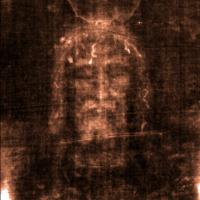
The Shroud bears anatomically detailed crucifixion bloodstains and a superficial, three-dimensional body image without detectable paint. The article argues that its cloth, dust, chemistry, image formation, and disputed dating identify it as Jesus's burial cloth and that no known natural or artistic process explains the image.
Natural Explanations of the Resurrection Claims (4)
Hallucination, legend, theft, wrong tomb, swoon, and cognitive dissonance compared against the surviving evidence.
The Historical Case for the Resurrection (3)
The empty tomb, burial, appearances, early creed, women witnesses, Paul, James, and the minimal-facts method.
Text and Transmission (4/5)
What the surviving manuscripts establish about the wording and development of the biblical books.
Inerrancy and the Missing Autographs (1)
What inerrancy claims, how it handles discrepancies and quotations, and whether a claim about lost originals can be tested.
World Religions (46/48)
Buddhism (4)
A teacher called Gotama very probably lived, but his teaching stayed oral for three to four centuries. Rebirth without a self is coherent but uncheckable, and the texts leave nirvana undefined. Meditation helps a little and tests no doctrine; the canon's Mount Meru fails as physics. The same tests bind Christian claims.
Eastern and Secular Worldviews (3/4)
Reincarnation, the claim that Jesus went to India, the pagan-copycat thesis, and secular worldviews such as atheism, humanism and pluralism, compared by the same evidential standards.
Hinduism (5)
The Rigveda dates to about 1500-1200 BC and stayed oral until about AD 1000. The kalpa's match with the earth's age is coincidence, and "Vedic science" is modern. Karma is a coherent but uncheckable theodicy that the classical texts used to justify caste. Sai Baba refused controlled tests, and the wonders checked failed. The same tests bind Christian claims.
Islam: Testing the Claims (14)
Thirteen investigations into Islam's historical claims. The Quran's consonantal text is early and stable, Muhammad certainly existed, and the charge of deliberate fraud fails. But perfect preservation, scientific miracles, literary inimitability, biblical prophecies of Muhammad, and the denial of the crucifixion do not survive the evidence. Popular arguments on both sides are retired here.
Hadith and Early Histories (1)
How reports were collected, criticized, canonized, and used to reconstruct the first Islamic century.
Islam and Christianity (4)
The crucifixion, Bible-corruption claim, Trinity, prophecy, and proposed biblical predictions of Muhammad.
Muhammad and Islamic Origins (3)
The earliest Muslim and non-Muslim evidence for Muhammad’s life and the rise of Islam.
The Qur’an (5)
Its manuscripts, textual history, chronology, claimed inimitability, and engagement with earlier traditions.
Judaism (5)
Judaism's strongest case against Jesus is the unfinished messianic work, and it turns on the resurrection. The Oral Torah's claim to come from Sinai in detail, and the short traditional chronology, fail on the evidence. Most Jews do descend largely from the ancient Levant. Several Christian proof-texts and claims of unwritten tradition fail the same tests.
Mormonism: Testing the Claims (15)
Fourteen investigations into Latter-day Saint truth claims, tested from the movement's own scriptures, leaders, and surviving documents. This page is the front door and links to all fourteen; the summary of where they came out is still to be written.
Joseph Smith and Prophetic Authority (3)
Joseph Smith’s restoration narrative, translation claims, and testable predictions.
Mormon History and Moral Claims (3)
Revelation and institutional authority tested in episodes with unusually complete records.
The Book of Mormon (6)
Its production, witnesses, language, proposed sources, historical setting, and genetic claims.
Sociology (3/37)
Biblical Ethics (2/11)
The moral objections raised against biblical law, narrative, judgment, and Christian teaching.
Purity, Punishment, and Care for the Poor (0/1)
Food laws, capital crimes, gleaning, jubilee, and treatment of resident foreigners in their ancient legal setting.
Sex, Gender, and Marriage (1/3)
The biblical claims and the best medical, psychological, and social evidence bearing on them.
 Problems in LGBT Studies Published
The article documents biased sampling, inflated statistics, selective publication, activist control of professional bodies, retaliation against dissenters, and poorly supported treatment claims. It concludes that political pressure has degraded parts of LGBT research, while individual studies still require case-by-case judgment.
Transgender Identity and Gender Dysphoria Planned
Biblical anthropology, biological sex, gender identity, dysphoria, transition outcomes, medical evidence, and competing ethical duties.
Slavery and Servitude (0/1)
Israelite, Greco-Roman, and modern slavery distinguished before the relevant biblical texts are judged.
War and the Canaanite Conquest (1)
The texts, archaeology, ancient war rhetoric, and the moral problem posed by commands of destruction.
 Ancient Israel: Morality of the Conquest of Canaan Being rewritten
Christianity's Effects on Society (0/6)
Claims that Christianity reshaped Western morality, institutions, learning, art, and everyday assumptions tested against history and rival causes.
Christianity in History (0/5)
The church's institutions, conflicts, failures, and reforms across two millennia.
Church History and Doctrine (0/6)
How Christian doctrines, institutions, movements, and divisions developed after the New Testament period.
Psychology of Religious Belief (1/6)
Psychological explanations of belief tested for explanatory power and for whether they also apply to unbelief.
The Church as Evidence (0/3)
Whether the behavior, endurance, growth, and decline of Christian communities count for or against their claims.
Tools (1)
Philosophy, Miracles & Experience (8/32)
Arguments for God (0/9)
The cosmological, moral, design, consciousness, reason, and religious-experience arguments in their strongest forms.
Miracles and Religious Experience (8/18)
Claims that might leave medical, historical, or independently observable evidence.
Dreams and Visions of Jesus (3)
Muslims who become Christians report dreams of Jesus, and have since 1922, but the numbers are small: roughly 100,000 to 2 million living people, most likely several hundred thousand. In 36 of 38 counted cases the dream came after contact with Christians or a Bible. No report in print has independent corroboration, and the popular figures grow in retelling.
The Problem of Evil and Divine Hiddenness (0/5)
The arguments that run the other way — suffering, silence, and the doctrines that make the problem worse rather than better.
Creationism Under Examination (2/9)
The Creation Movement (2/9)
The movement's claims, institutions, incentives, failures, and real contributions judged by the same standards used elsewhere.
Methods & Evidence (0/12)
How to Evaluate Evidence (0/12)
Source criticism, statistics, scientific inference, testimony, miracle claims, bias, and standards applied equally to every side.